
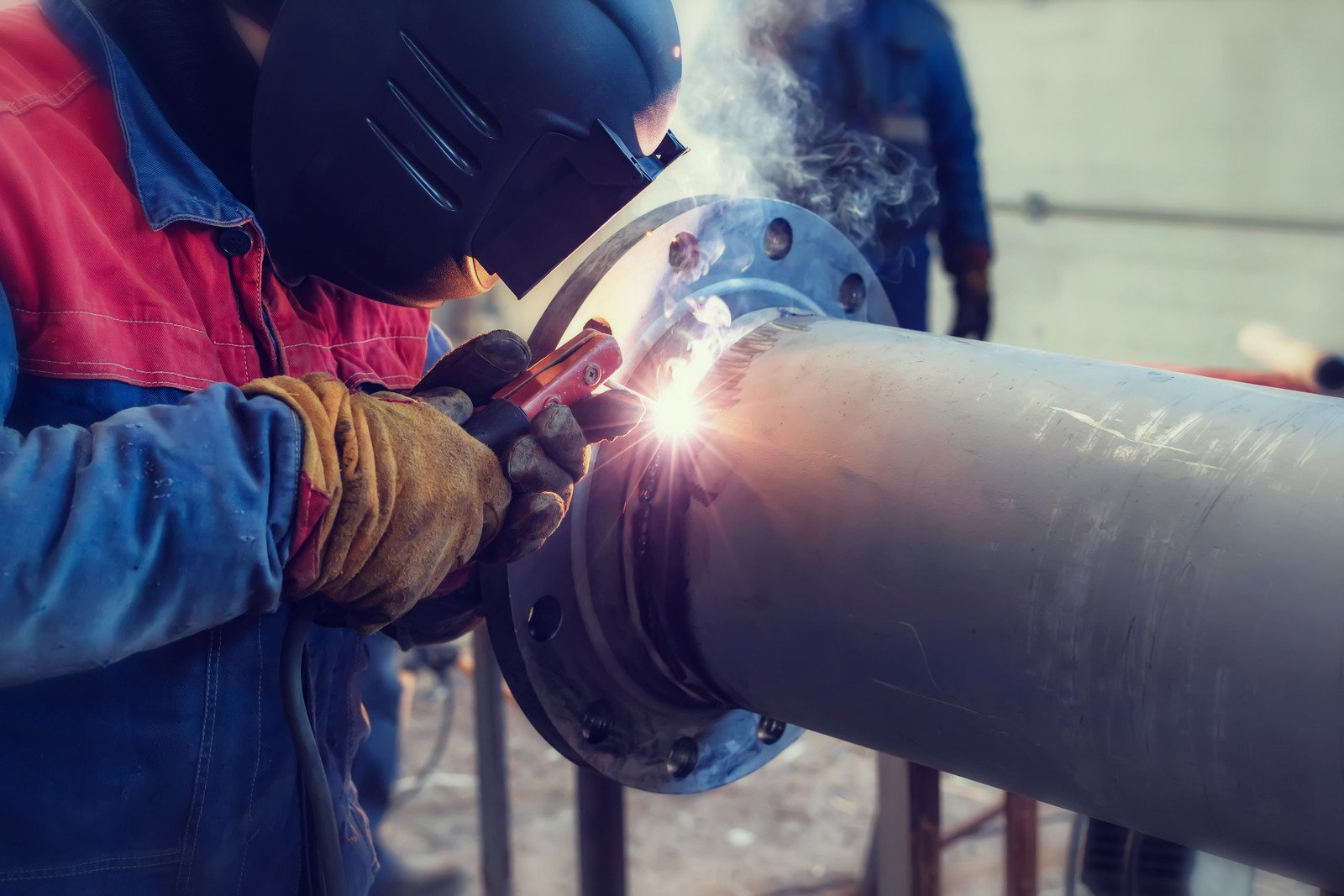
What does the pipeline welding training course involve?
This training course prepares participants to carry out joints in thermoplastic pipework used, amongst other things, in water supply networks, industrial installations and process systems. The courses are designed for welders and staff responsible for supervising the welding process. The individual course options vary in scope and are selected taking into account the welding method, the type of plastic and the intended role.
KURSO provides training courses focusing primarily on butt welding and electrofusion welding. In certain cases, the programme is extended to include the IR method, which is used in environments with high cleanliness requirements.
Who is this training course aimed at?
The course is intended for those involved in the installation of thermoplastic pipework and for staff responsible for supervising the work and inspecting the completed joints.
Information for the webmaster: It would be a good idea to include a simple table here.
| Type of training | Main scope |
|---|---|
| Welding machine | making connections and operating equipment |
| Supervision | parameter checks, documentation and acceptance of work |
Choosing the right method for the material
The choice of welding technology depends on the type of plastic, the diameter of the components and the working conditions. Polyethylene (PE) and polypropylene (PP) are most commonly joined using butt welding or electrofusion, whilst PVC and PVDF require welding parameters to be determined on a case-by-case basis. The IR method is primarily used in environments with high cleanliness requirements.
Training program
The programme comprises both a theoretical and a practical component. During the sessions, the following topics are covered: the properties of thermoplastics, the preparation of components for welding, the selection of process parameters, the operation of equipment, safety rules and the technical requirements for making joints. Practical exercises allow participants to practise the successive stages of the work using the equipment employed during pipeline installation.
During the course, participants learn, amongst other things:
- preparation of pipes and fittings,
- setting operating parameters,
- operation of heat-sealing machines,
- making calls,
- quality control,
- analyses of the most common errors.
The skills acquired are used in the construction and modernisation of:
- water supply networks,
- sewerage,
- industrial installations,
- chemical plants,
- technological systems,
- systems operating in environments with high cleanliness requirements.
Certificate upon completion of the training course
Upon completion of the course, a certificate is issued specifying the welding method, the type of plastic, the range of diameters, the type of application and the post to which it relates. The document always refers to a specific scope of work and is not of a general nature. Extending one’s qualifications requires completion of a further training course.
Organisation of the course
The training courses organised by KURSO take place at a centre equipped with workstations designed for learning how to weld thermoplastic pipelines. Participants have access to the equipment used during the exercises and to facilities that enable practical sessions to be conducted under consistent conditions.
For companies and larger teams, it is also possible to organise training at a venue specified by the client, including the transport of equipment.
Exams and confirmation of readiness
The course concludes with an internal assessment covering both the theoretical and practical components. The aim of this assessment is to evaluate the participants’ mastery of the topics covered in the training programme.
Those who require additional confirmation of their competence may sit an examination before a panel of the Technical Inspection Authority or through the TÜV system.
Related courses
The range of services also includes training courses on extrusion and the welding of thermoplastics. These courses complement the skills of those involved in the production, assembly and repair of plastic components.
Registration
We invite you to take part in the training courses organised by KURSO. We will help you choose a course that matches your planned professional responsibilities and the required qualifications.
FAQ
Can one person learn all three methods?
Yes, the course may cover more than one welding method, provided that this scope is agreed upon before the course begins. This approach works well for teams working on different types of installations.
How does butt welding differ from electrofusion welding?
Butt welding involves heating the ends of the pipes on a heating plate and joining them under pressure, whilst the electrofusion method uses fittings with a built-in heating element that heats the material from the inside. The first technique is suitable for larger diameters, whilst the second is used for connections and branches, where access to the pipe is often restricted. The choice of method depends on the installation location and the type of joint being made.
When is the IR method used?
The IR method is used in installations with high cleanliness requirements, such as in the pharmaceutical or food industries. The process takes place without the heating element coming into direct contact with the pipe surface.
Does the certificate cover all welding methods?
The certificate always relates to a specific method, material and diameter range as specified in the syllabus of the completed course. Extending one’s qualifications to include a further technique requires attendance at a separate training course.
Do you have to sit the internal exam separately for each method?
Yes, the internal examination assesses a participant’s readiness to work with a specific welding technique; therefore, participants sit the exam for each method covered by the training programme. The examination comprises a theoretical and a practical component. Those extending their qualifications to include a further method sit the exam again, this time covering the new scope.
